
Behavioral Measurements
MAGICS provides several alternatives for measuring human behavior and experiences, from classical highly controlled experimental laboratory to more ecologically valid conditions.
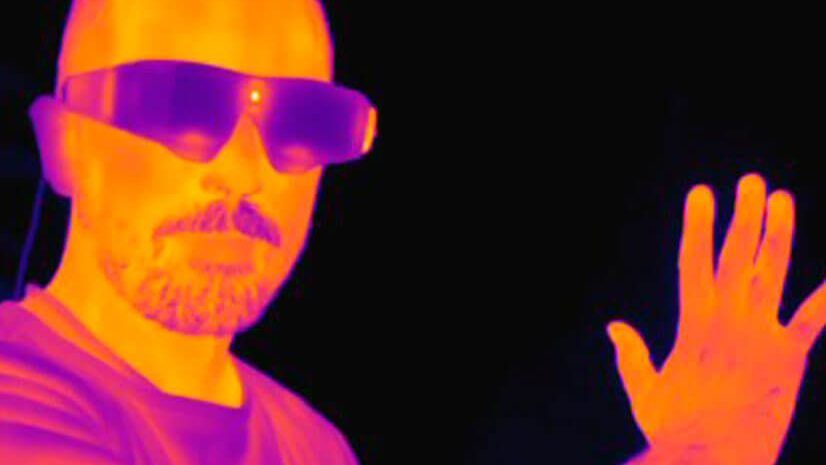
In Aalto Behavioral Laboratory (ABL), part of the Aalto Neuroimaging Infrastructure (ANI), you can do measurements among other things with EEG, EMG, ECG, GSR, Accelerometers, Thermal camera and Eye Trackers. There are different measurement spaces for different usage, like electrically shielded room for EEG studies, Virtual Reality room for VR and XR studies and larger room for multi-person measurements. There are also stimulus systems for each space, which can produce, e.g., visual, audio and thermal stimuli. Several devices are loanable, including mobile EEG, head mounted eye trackers, thermal camera, remote EMG/ECG sensors and VR headset. To use these equipment, please refer to operation instructions, and fill in the required research permission document. Contact person is Veli-Matti Saarinen.
In Tampere University MAGICS coincides with the local Nexus research infrastructure that collects the infrastructure for experimental study of human participants. This includes continuously evolving equipment for EEG, EMG, ECG, GSR, fNIRS, audio, video, eye tracking, and similar methods for measuring physiological correlates for cognitive activities, emotions, etc. There are several sound insulated, electro-magnetically shielded laboratories for these activities including 4 that have the possibility of adjusting air humidity and temperature so that conditions are exactly the same regardless of surrounding weather conditions. If the parameters are known the environmental conditions of any study can be replicated. Many of the physiological measurement systems can be used simultaneously with VR/XR headsets, but there are also some combination devices such as Galea specifically built for measuring during VR experiences.
In Human-Centered Research Hub, there is an extensive infrastructure for measuring human behavior, neural signals, and different human sensory modalities, including touch and olfaction. Laboratory equipment allows measurement of EEG, EMG, ECG, GSR, fMRI, different types of Accelerometers, Thermal cameras and Eye Trackers. There is a wide selection of equipment for generating different types of sensory stimulations, including visual, auditive, haptic and olfaction stimuli. Different types of XR headsets and glasses are available. Training to use devices is mandatory. Contact person is Poika Isokoski.
In University of Jyväskylä (JYU), the Faculty of Education and Psychology has extensive infrastructure for measuring human behavior and neural signals. These include magnetoencephalography (MEG) laboratory, and three EEG laboratories, portable EEG devices, portable and fixed eye-trackers, and VR headsets (cibr.jyu.fi). In addition, there are portable sensors for measuring ECG and EMG, and several small audio and video recorders for interview and interaction research. To have access and learn more of the measurement possibilities, contact Jarmo Hämäläinen on collaboration possibilities and overall infrastructure, or Tiina Kullberg on questions regarding specific equipment.
In Turku University of Applied Sciences, the Futuristic Interactive Technologies (FIT) research group has a laboratory and a showroom facilities for measuring human behaviour, experiences and interaction in digital environments. The facilities support experiments and user studies utilizing visual, auditory and haptic stimulation, as well as immersive XR technologies. The infrastructure includes a variety of XR headsets, eye-tracking capable devices, 360° content production equipment and a multi-user metaverse environment for collaborative experiments. These facilities can be used for user experience research, usability evaluation, immersive learning studies and the development of novel interaction concepts. To learn more about the available facilities and equipment, please contact Jami Aho.